RTS 9 sets out what a jackpot's rules must disclose about funding, ceilings, simultaneous triggers and decommissioning. We check two real product pages against it.
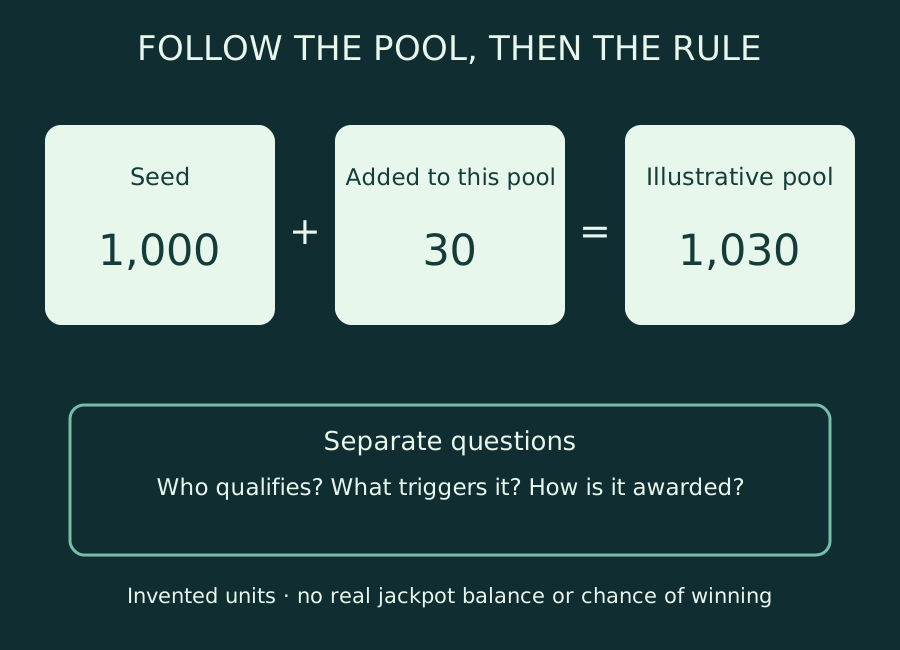
Separate a jackpot’s funding from its eligibility and award rules, with a contribution worksheet and a close reading of Virgin Games and Red Tiger descriptions.
Compare documented timed, amount-bounded and uncapped jackpot products. A worked counter example shows why the remaining gap does not reveal your win chance.
Use a documented 10p jackpot addition to separate base stake, total commitment and eligibility. Worked examples explain percentage shares without promising prizes.
The Gambling Commission's technical glossary describes a progressive jackpot as a prize that grows from a preset base through contributions from amounts staked.
What’s the difference between progressive slots and regular slots?
A progressive jackpot adds a prize pool that can grow under its own rules. Classify the jackpot layer separately from the base slot: a progressive pool may have a time boundary, amount boundary or neither in the published description.
How can you tell if a slot machine is progressive?
Read the named game’s jackpot rules for a growing pool, funding and reset conditions. A large displayed number alone does not distinguish a progressive prize from a fixed one.
It can mean a smaller amount gap where a documented threshold applies, but it does not disclose the next entry’s probability. An uncapped or time-bounded product needs a different description.
No. Sky’s Big Drop FAQ expressly answers no, and a network award condition is not an individual entitlement. Eligibility and the award-selection process remain separate questions.
Does a must-drop jackpot have to pay out before a set time?
Only where that product's terms state a time boundary. Virgin's terms say its Daily and Hourly jackpots must be won before a specified date and time; Sky's general help describes amount thresholds instead.